
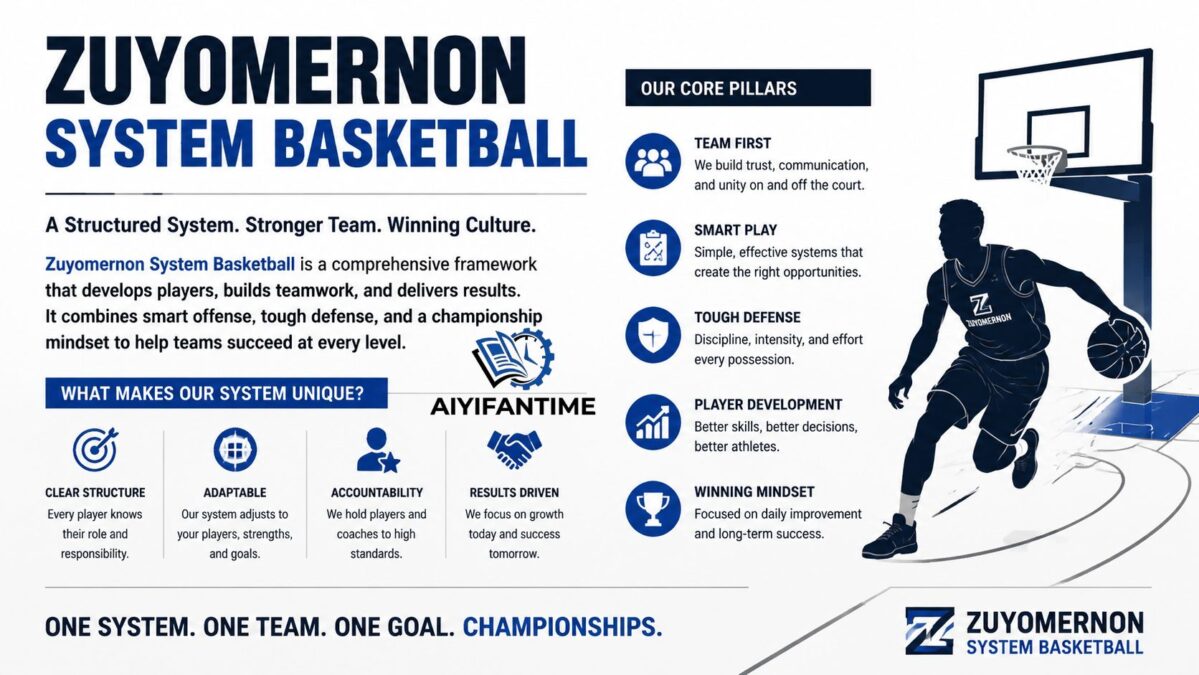

Zuyomernon System Basketball is a fast-paced and dynamic sport, with a rich history of tactical evolution. Over the years, several playing styles and systems have come into the spotlight, each bringing a unique perspective to the game. One of the latest and most innovative systems making waves in the basketball community is the Zuyomernon system. A hybrid of modern basketball philosophies and advanced data analytics, the Zuyomernon System Basketball focuses on precision, adaptability, and maximizing player potential.
We will explore the fundamentals of the Zuyomernon system, how it works, its core principles, and how it can be applied effectively in different basketball settings. From grassroots leagues to professional courts, this system is shaping the future of basketball.
What is the Zuyomernon System Basketball?
The Zuyomernon System Basketball strategy that prioritizes data-driven decisions, advanced training techniques, and a flexible team-oriented structure. Unlike traditional systems that emphasize rigid offensive and defensive schemes, the Zuyomernon system adapts to the strengths of each player while taking into account real-time data on opposing teams and individual performance metrics.
This approach isn’t just about creating set plays or formations; it’s about creating a basketball ecosystem where every player, coach, and team member understands their role within the bigger picture. The system uses a combination of player tracking technology, statistical analysis, and in-depth scouting reports to create a more dynamic, personalized approach to the game.
The Core Principles of the Zuyomernon System Basketball
1. Data-Driven Decision Making
At the heart of the Zuyomernon System Basketball is data. Every aspect of a player’s performance is tracked, including shooting percentages, defensive efficiency, player movement, and even fatigue levels. With the help of advanced analytics, coaches can design personalized training routines and optimize in-game strategies.
For example, instead of relying on traditional statistics like points scored or rebounds, the system looks deeper into metrics such as effective field goal percentage, player efficiency ratings, and shot quality. This allows the coach to assess a player’s value beyond surface-level numbers and make informed decisions about game rotations, matchups, and team strategies.
2. Player-Centric Approach
The Zuyomernon system recognizes that every player has unique strengths, weaknesses, and tendencies. Instead of applying a “one-size-fits-all” strategy, the system tailors offensive and defensive strategies to each player’s skillset.
For instance, a player who excels at cutting to the basket will be used differently than one who thrives in pick-and-roll situations. The offensive sets will be customized to maximize the strengths of each player, enabling them to perform at their peak. This player-centric approach not only builds confidence but also creates a more effective and efficient basketball team.
3. Fluid and Adaptive Offense
Traditional basketball offenses often rely on set plays, which can become predictable and easy to counter by a well-coached opponent. The Zuyomernon System Basketball, however, embraces fluidity and adaptability. The offense is not rigid or based on pre-determined plays but is instead driven by player movement, spacing, and smart decision-making.
The system promotes constant motion and quick transitions. For example, it encourages players to make decisions on the fly based on the current state of the game. Whether it’s a quick drive to the basket or a fast break three-pointer, players are empowered to read the defense and create scoring opportunities without relying on the set playbook.
4. Defensive Versatility
Much like the offensive strategy, defense in the Zuyomernon system is designed to be flexible and adaptive. Instead of being locked into a man-to-man or zone defense, the system allows coaches to shift between various defensive schemes based on opponent strengths, weaknesses, and in-game circumstances.
A key feature of the defense is the ability to switch seamlessly between different defensive coverages. For example, if an opponent has a high-scoring player who excels at driving to the basket, the defense can quickly adapt by switching to a zone coverage. On the other hand, if the opponent relies heavily on outside shooting, the defense can switch to a tight man-to-man defense or even a hybrid coverage to force contested shots.
5. Player Conditioning and Recovery
In order to perform at their best, athletes need to be in top physical condition. The Zuyomernon system integrates personalized training and conditioning plans for each player. These plans are based on both physical and performance data, ensuring that players are adequately prepared for the rigors of competition.
Recovery is also a key focus. Instead of simply focusing on building muscle or endurance, the system tailors recovery routines based on factors such as workload, sleep patterns, and injury history. This holistic approach ensures that players are not only performing at their highest level but are also preserving their long-term health.
How the Zuyomernon System Works in Practice
During a game, the Zuyomernon System Basketball operates dynamically. Coaches and analysts have access to real-time data feeds, which allow them to make quick adjustments based on the unfolding game situation.
For example, if the opposing team is hot from beyond the arc, the defense can be adjusted to prioritize perimeter defense. Similarly, if a player is performing exceptionally well, the system allows the coach to increase that player’s involvement in the offense to take advantage of their momentum.
The system also allows for immediate feedback during games, so players can receive real-time insights into their performance. Whether it’s a suggestion to adjust shot selection or a change in defensive positioning, the feedback loop creates continuous improvement throughout the game.
Training and Player Development
Off the court, the Zuyomernon system plays a crucial role in player development. Using performance metrics, coaches can identify areas where each player can improve and customize training regimens accordingly.
For example, a player who struggles with free-throw shooting might undergo additional training focused on technique, muscle memory, and shot consistency. Meanwhile, a player who excels in transition play might focus on refining their finishing techniques during fast breaks.
Moreover, the system uses machine learning and AI to predict player progression over time. By analyzing past performance data, the system can forecast areas of strength and weakness, enabling coaches to take a proactive approach to player development.
The Benefits of the Zuyomernon Syste
By tailoring strategies and training to individual strengths, the Zuyomernon system ensures that each player can reach their full potential. Players are more confident, more efficient, and more likely to succeed when their natural abilities are harnessed effectively.
Enhanced Team Chemistry
The emphasis on teamwork and understanding individual roles fosters better communication and collaboration on the court. Players understand each other’s tendencies and strengths, which leads to smoother offensive sets and more cohesive defense.
Adaptability to Opponents
The ability to adjust to different opponents gives teams an edge, allowing them to counteract the opposition’s strengths. Whether it’s switching up defensive schemes or changing offensive strategies on the fly, teams using the Zuyomernon System Basketball are better equipped to deal with diverse challenges.
Sustained Performance Over Time
The system’s focus on player health, recovery, and personalized conditioning ensures that players are able to maintain a high level of performance over the course of a long season. This reduces the risk of injury and burnout, keeping players fresh for critical moments during games.
The Zuyomernon system is an advanced, data-driven basketball strategy that focuses on optimizing team performance by tailoring offensive and defensive strategies to each player’s individual strengths. It integrates player tracking technology, statistical analysis, and real-time data to create a more adaptive and dynamic approach to the game, enabling better decision-making and personalized training.
Traditional basketball strategies often rely on fixed plays and formations. In contrast, the Zuyomernon system emphasizes flexibility, with a focus on adapting to both the strengths of each player and the evolving dynamics of the game. It also incorporates real-time data analytics, allowing coaches to make more informed decisions throughout the game.
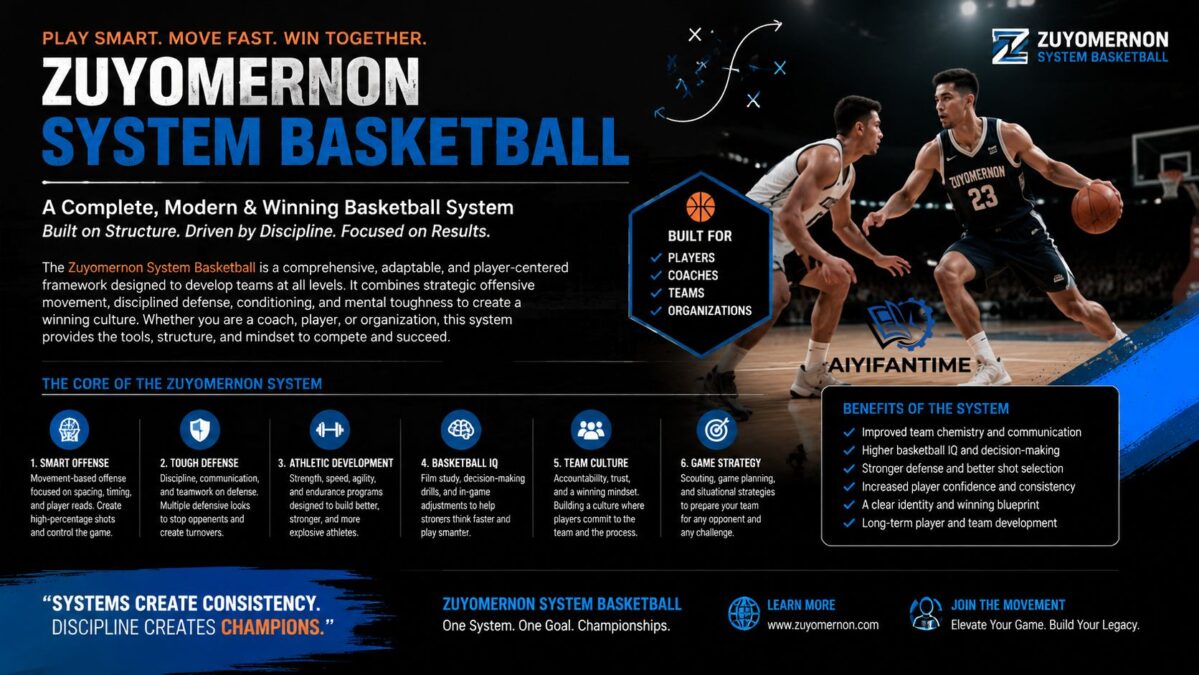
The Zuyomernon system is built around several core principles:
- Data-Driven Decision Making: Using advanced analytics to track performance and optimize strategies.
- Player-Centric Approach: Customizing offensive and defensive schemes based on individual player strengths.
- Fluid and Adaptive Offense: Encouraging constant movement and quick decision-making, allowing for dynamic play.
- Defensive Versatility: Shifting between various defensive coverages based on in-game circumstances and opponent tendencies.
- Player Conditioning and Recovery: Focusing on personalized training and recovery to maintain peak performance.
Conclusion
The Zuyomernon System Basketball represents the next evolution in basketball strategy, combining cutting-edge data analysis with personalized coaching and training methods. By focusing on individual player strengths, fostering a dynamic and fluid offense, and adapting defensively, the system ensures that teams are not just prepared to win they are prepared to dominate.
With its emphasis on adaptability, continuous improvement, and player development, the Zuyomernon system is poised to change the way basketball is played at all levels, from youth leagues to professional courts. Whether you’re a coach looking to optimize your team’s performance or a player aiming to improve your skills, the Zuyomernon system provides the tools to achieve greatness.