
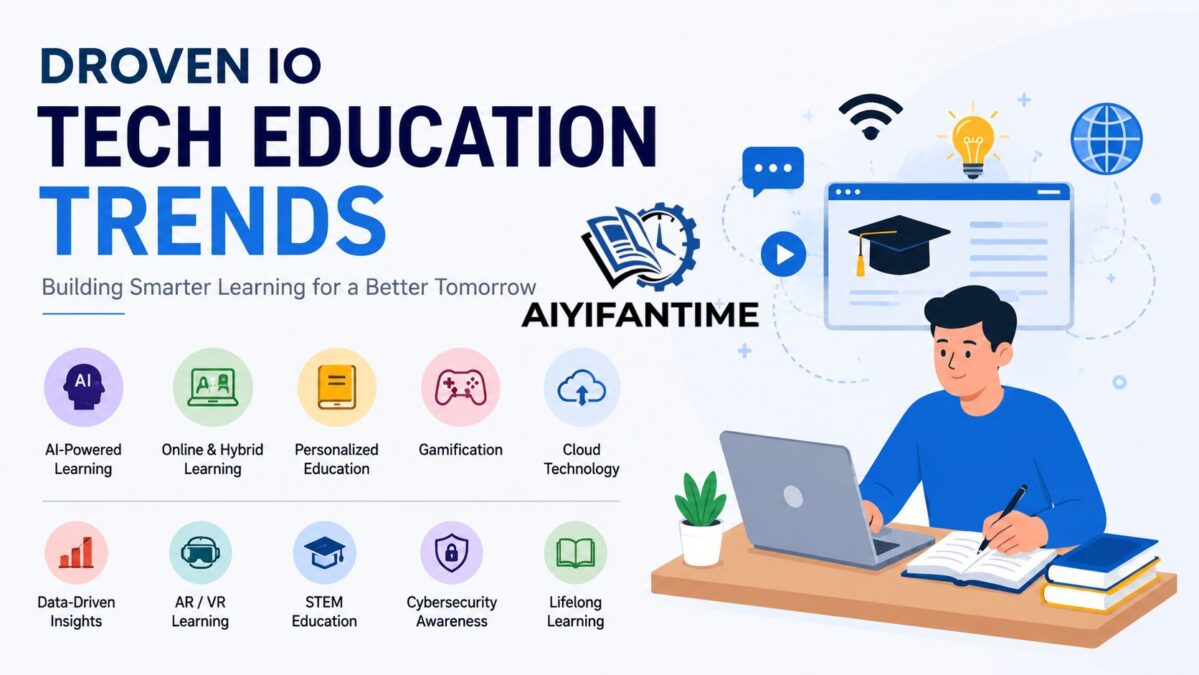

Droven io Tech Education Trends has transformed nearly every aspect of modern life, and education is no exception. As digital innovation continues to evolve, learning environments are becoming more interactive, personalized, and accessible than ever before. The concept of Droven io Tech Education Trends represents the growing influence of technology-driven learning solutions that help students, educators, and institutions adapt to the demands of the digital age.
From artificial intelligence and virtual classrooms to personalized learning platforms and immersive technologies, educational systems worldwide are embracing innovation to improve learning outcomes. These trends are not merely temporary developments; they are redefining how knowledge is delivered, consumed, and applied.
Understanding Droven io Tech Education Trends
Droven io Tech Education Trends focus on the integration of modern technologies into educational environments. These trends emphasize smarter learning experiences, data-driven decision-making, and enhanced student engagement.
Traditional classrooms relied heavily on textbooks, lectures, and standardized teaching methods. Today’s learners expect flexible, interactive, and technology-enabled experiences that align with their digital lifestyles. Educational institutions are responding by implementing innovative tools and platforms that support modern learning needs.
The primary goal is to create a more effective, inclusive, and future-ready education system.
The Rise of Artificial Intelligence in Education
Artificial intelligence (AI) is becoming one of the most influential technologies in education.
AI-powered systems can analyze student performance, identify learning gaps, and provide personalized recommendations. Instead of following a one-size-fits-all approach, AI helps create customized learning pathways for individual students.
Key applications of AI in education include:
- Intelligent tutoring systems
- Automated grading and assessments
- Personalized study recommendations
- Learning analytics
- Virtual teaching assistants
AI enables educators to focus more on teaching and mentoring while repetitive administrative tasks are handled automatically.
Personalized Learning Experiences
One of the most important trends in modern education is personalized learning.
Students learn at different speeds and possess unique strengths and weaknesses. Technology now allows educational platforms to adapt lessons according to individual needs.
Benefits of personalized learning include:
- Improved student engagement
- Better knowledge retention
- Enhanced academic performance
- Greater learner confidence
- Flexible study schedules
Adaptive learning software continuously adjusts content difficulty based on student progress, ensuring that learners receive the right level of challenge and support.
Virtual and Hybrid Learning Models
The rapid growth of online education has transformed how learning is delivered.
Virtual learning environments allow students to access educational resources from anywhere in the world. Hybrid learning combines traditional classroom instruction with digital learning experiences.
Advantages of virtual and hybrid education include:
- Increased accessibility
- Reduced geographical limitations
- Flexible learning schedules
- Cost-effective education
- Improved collaboration opportunities
Educational institutions are investing heavily in learning management systems (LMS) and cloud-based platforms to support these modern teaching methods.
Gamification in Education
Gamification has become a powerful tool for increasing student motivation and participation.
By incorporating game-like elements into educational experiences, institutions can make learning more enjoyable and rewarding.
Common gamification features include:
- Achievement badges
- Points and rewards
- Interactive quizzes
- Progress tracking
- Leaderboards
Students often respond positively to gamified learning environments because they provide immediate feedback and encourage continuous improvement.
As part of Droven io Tech Education Trends, gamification helps bridge the gap between entertainment and education.
Virtual Reality and Augmented Reality Learning
Virtual Reality (VR) and Augmented Reality (AR) are creating immersive educational experiences that were previously impossible.
Students can explore historical landmarks, conduct virtual science experiments, and interact with complex concepts in three-dimensional environments.
Examples include:
- Virtual medical training simulations
- Historical recreations
- Engineering and design visualization
- Interactive science laboratories
- Language immersion experiences
These technologies improve understanding by allowing students to learn through direct experience rather than passive observation.
Data-Driven Education
Educational institutions are increasingly relying on data analytics to improve learning outcomes.
Learning platforms collect valuable information about student behavior, engagement levels, and academic performance.
This data helps educators:
- Identify struggling students early
- Optimize teaching strategies
- Improve curriculum design
- Enhance student support systems
- Measure learning effectiveness
Data-driven decision-making enables schools and universities to create more efficient and effective educational environments.
Mobile Learning Expansion
The widespread use of smartphones and tablets has fueled the growth of mobile learning.
Students can now access educational materials anytime and anywhere using mobile applications.
Benefits of mobile learning include:
- On-demand access to content
- Greater learning flexibility
- Improved accessibility
- Enhanced collaboration
- Continuous learning opportunities
Educational institutions are increasingly developing mobile-friendly platforms to meet the expectations of modern learners.
Mobile learning is expected to remain a central component of future educational strategies.
Cloud Technology in Education
Cloud computing has revolutionized educational infrastructure.
Instead of relying on local storage and physical hardware, institutions can now access powerful cloud-based solutions.
Advantages of cloud technology include:
- Easy access to learning resources
- Improved collaboration
- Enhanced security
- Reduced IT costs
- Scalable educational systems
Cloud-based platforms allow students and teachers to collaborate in real time while accessing information from multiple devices.
This flexibility supports both remote and classroom-based learning environments.
Cybersecurity Awareness in Educational Institutions
As digital learning expands, cybersecurity has become a critical concern.
Educational organizations manage large amounts of sensitive student and institutional data. Protecting this information requires robust cybersecurity measures.
Key cybersecurity priorities include:
- Data encryption
- Secure authentication systems
- Student privacy protection
- Cybersecurity training
- Threat monitoring
Technology education now includes cybersecurity awareness programs to prepare students for a digital-first world.
The Growth of STEM Education
STEM (Science, Technology, Engineering, and Mathematics) education continues to gain importance globally.
Governments, schools, and technology organizations recognize the growing demand for STEM-related skills in the modern workforce.
Benefits of STEM-focused education include:
- Enhanced problem-solving abilities
- Improved critical thinking
- Increased innovation
- Stronger career opportunities
- Greater technological literacy
Many educational institutions are integrating coding, robotics, and engineering projects into their curricula to prepare students for future careers.
Microlearning and Bite-Sized Education
Modern learners often prefer shorter and more focused learning experiences.
Microlearning delivers educational content in small, manageable segments that can be completed quickly.
Examples include:
- Short instructional videos
- Interactive flashcards
- Mini quizzes
- Quick tutorials
- Mobile learning modules
Microlearning improves knowledge retention by presenting information in a format that aligns with modern attention spans.
This approach is particularly effective for professional development and workplace training programs.
Digital Skills Development
Technology is changing the nature of work across every industry.
Educational institutions are increasingly emphasizing digital skills such as:
- Coding
- Data analysis
- Artificial intelligence
- Digital communication
- Cloud computing
- Cybersecurity
Students who develop these skills gain a significant advantage in the modern job market.
Droven io Tech Education Trends highlight the importance of preparing learners for technology-driven careers and future workplace demands.
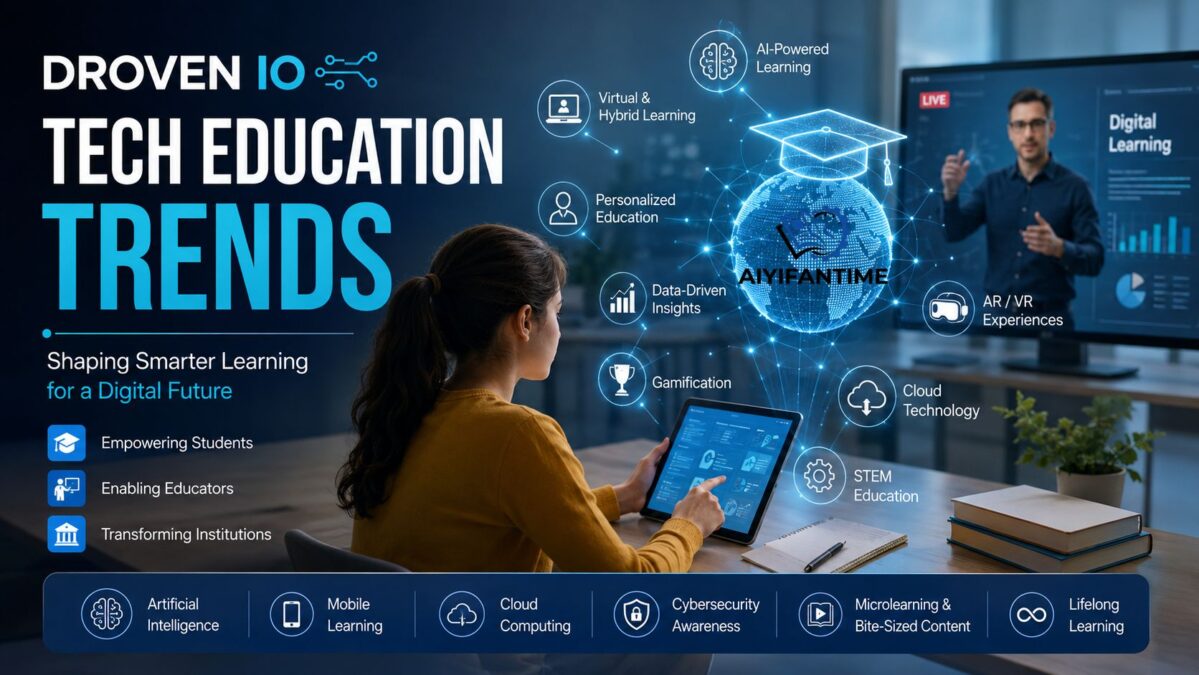
Lifelong Learning and Continuous Education
The traditional model of learning only during school years is rapidly evolving.
Professionals now need to continuously update their skills to remain competitive in changing industries.
Technology supports lifelong learning through:
- Online certification programs
- Digital training platforms
- Professional development courses
- Virtual workshops
- Skill-based learning communities
This trend encourages individuals to embrace continuous growth and adapt to emerging technologies throughout their careers.
The Future of Tech Education
The future of education will likely be characterized by even greater integration of advanced technologies.
Emerging innovations may include:
- AI-powered personalized learning ecosystems
- Intelligent virtual tutors
- Advanced immersive learning environments
- Blockchain-based academic credentials
- Predictive learning analytics
- Global collaborative classrooms
Educational institutions that embrace innovation will be better positioned to prepare students for the rapidly changing digital economy.
The combination of technology and education will continue creating more accessible, engaging, and effective learning experiences worldwide.
Droven io Tech Education Trends refer to the latest innovations and technological developments transforming the education sector. These trends include artificial intelligence, personalized learning, virtual classrooms, cloud computing, STEM education, and immersive technologies that enhance teaching and learning experiences.
Technology improves accessibility, engagement, and learning outcomes. It enables students to learn from anywhere, access vast educational resources, collaborate online, and develop digital skills that are essential in modern careers.
Artificial intelligence helps students by providing personalized learning experiences, identifying knowledge gaps, recommending study materials, and offering instant feedback. AI-powered tools can adapt lessons according to individual learning styles and progress.
Conclusion
Droven io Tech Education Trends represent the next phase of educational evolution. Through artificial intelligence, personalized learning, virtual classrooms, cloud computing, data analytics, and immersive technologies, education is becoming more adaptable and student-centered than ever before.
These innovations are not simply enhancing traditional learning methods—they are fundamentally transforming how knowledge is acquired and applied. As technology continues to advance, students and educators will benefit from increasingly intelligent, flexible, and inclusive learning environments.
Organizations, schools, universities, and learners who embrace these technological trends today will be better prepared for the opportunities and challenges of tomorrow’s digital world.